How to Travel Around the UK: Train, Bus, Car or Coach?
Planning a trip around the United Kingdom? Compare trains, buses, coaches and rental cars to find the best way to travel between Britain’s cities, countryside and major attractions.
For most first-time visitors, trains are the easiest way to travel between major UK cities. Coaches are often better for budget travel, while a rental car is more useful for rural destinations such as the Cotswolds, Lake District and Scottish Highlands. In many cases, the best solution is to combine several transport options.
Figuring out how to travel around the UK can be one of the most confusing parts of planning your first British holiday.
Should you take a train from London to Edinburgh? Is a coach cheaper? Would renting a car make a countryside trip easier? And do you actually need a car at all?
The answer depends on your itinerary, budget, travel style and the places you want to visit. The good news is that you do not have to choose just one form of transportation for your entire trip.
A combination of trains, buses, coaches, walking and occasional car rental often gives international visitors the best balance of convenience, cost and flexibility.
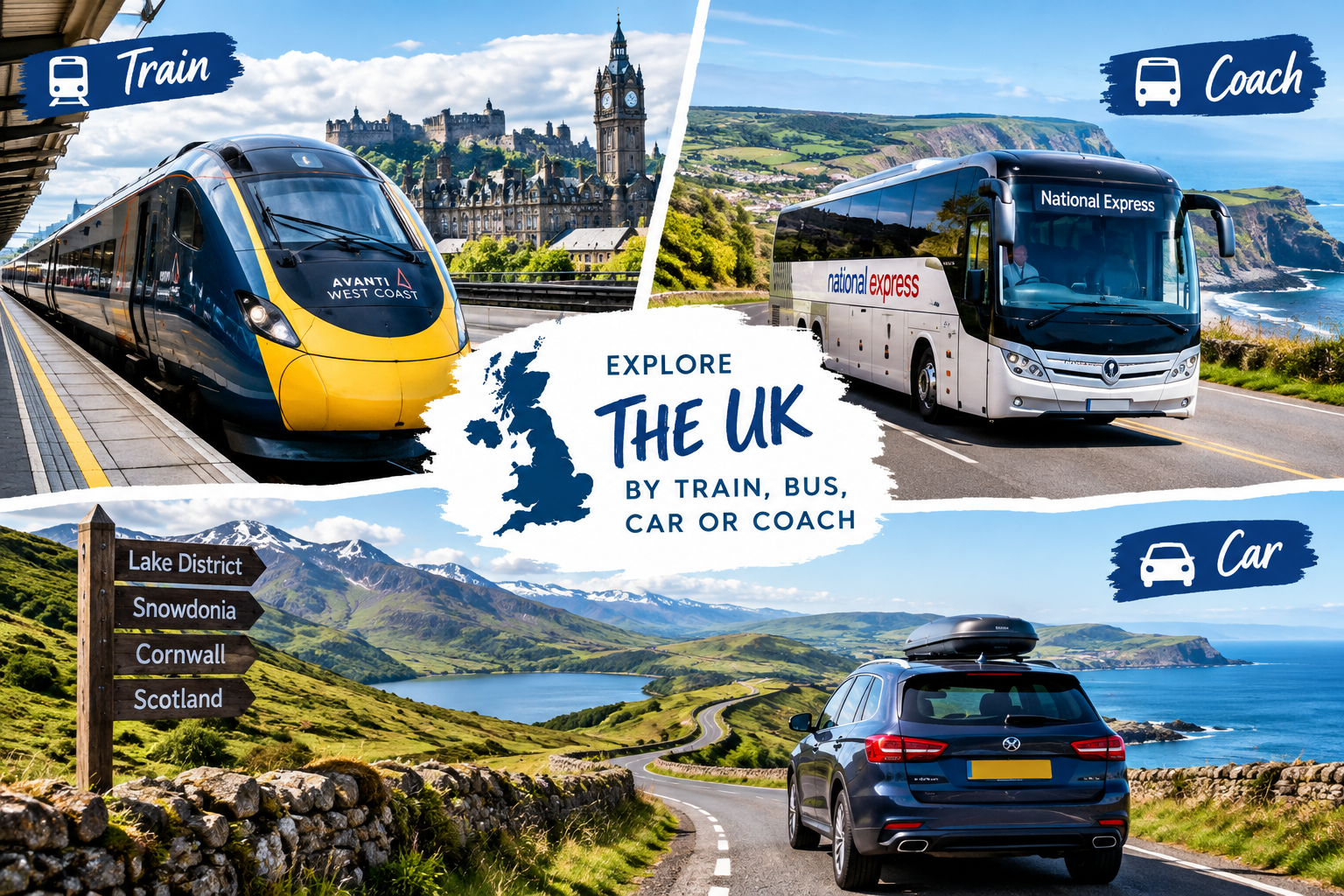
Train vs Bus vs Car vs Coach: Quick Comparison
There is no single best transport option for every UK itinerary. Use this comparison as a starting point.
Train
Best for major cities and longer journeys where you want speed and convenience.
Bus
Useful for local journeys, smaller towns and destinations not directly served by rail.
Coach
Often a cheaper alternative to trains for longer journeys between major cities.
Rental Car
Provides flexibility when exploring countryside, villages and remote attractions.
| Transport | Best For | Cost | Speed | Convenience |
|---|---|---|---|---|
| Train | Major cities | $$ | ★★★★★ | ★★★★★ |
| Bus | Local travel | $ | ★★★ | ★★★ |
| Coach | Budget long-distance travel | $ | ★★ | ★★★ |
| Rental Car | Countryside & road trips | $$$ | ★★★★ | ★★★★ |
| Walking | City centres | Free | ★★ | ★★★★★ |
Travelling Around the UK by Train
For many international visitors, train travel is the best way to travel around the UK, particularly when visiting major cities.
Britain’s rail network connects London with destinations including Edinburgh, Manchester, Liverpool, York, Bath, Bristol, Birmingham, Cardiff and many other cities.
Trains are especially useful when your itinerary involves several major destinations because they can take you directly from one city centre to another without the need to drive or find parking.
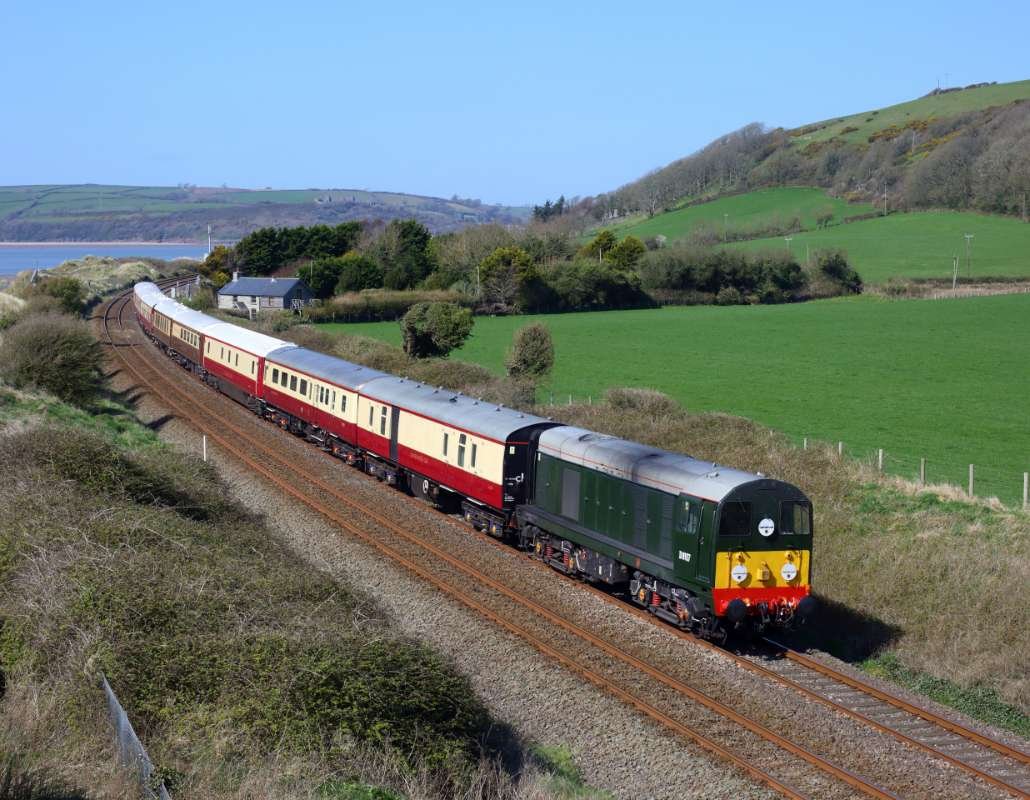
Advantages of UK Train Travel
- Fast connections between many major cities
- Convenient city-centre to city-centre journeys
- No need to drive or navigate unfamiliar roads
- Comfortable for longer journeys
- Easy to combine with walking and local public transport
Disadvantages of UK Train Travel
- Some last-minute fares can be expensive
- Popular trains can become busy
- Rural destinations may require buses or taxis
- Delays and cancellations can occasionally affect journeys
How Much Does Train Travel Cost in the UK?
UK train fares vary depending on the route, travel date, departure time, ticket type and how far ahead you book.
If your itinerary is fixed, it is worth comparing fares before travelling, particularly for popular long-distance routes.
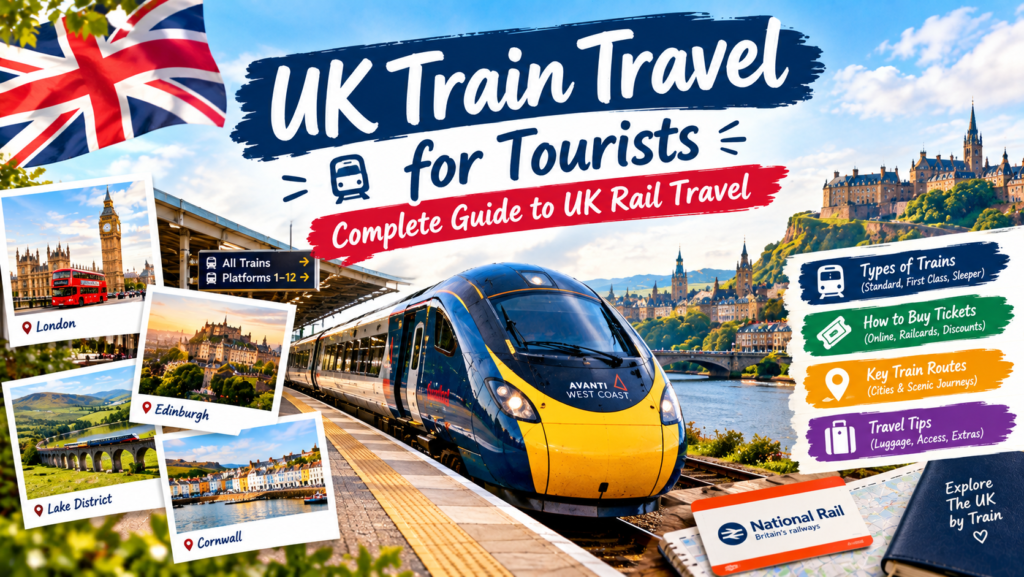
If you want a more detailed explanation of tickets and rail travel, see our guide to UK Train Travel for Tourists .
Understanding UK Train Tickets
UK train tickets can initially look complicated, but tourists generally only need to understand a few basic ticket types.
Do Tourists Need a UK Rail Pass?
Not necessarily. A rail pass can make sense for some itineraries, but you should compare its cost with individual train tickets before buying.
Consider the number of journeys you are making, your travel dates and how much flexibility you need.
Travelling Around the UK by Bus
Local buses are an important part of the UK’s public transport network. While trains are often better for long-distance journeys, buses can be more useful for reaching smaller towns, villages and attractions.
A common UK journey might involve taking a train to a nearby city and then using a local bus to reach your final destination.
Advantages of Buses
- Often inexpensive
- Useful where rail services do not reach
- Good for shorter journeys
- Useful for connecting railway stations with smaller destinations
Disadvantages of Buses
- Usually slower than trains
- Rural services may be less frequent
- Evening and Sunday services can be limited in some areas
- Routes and schedules vary between regions
Travelling Around the UK by Coach
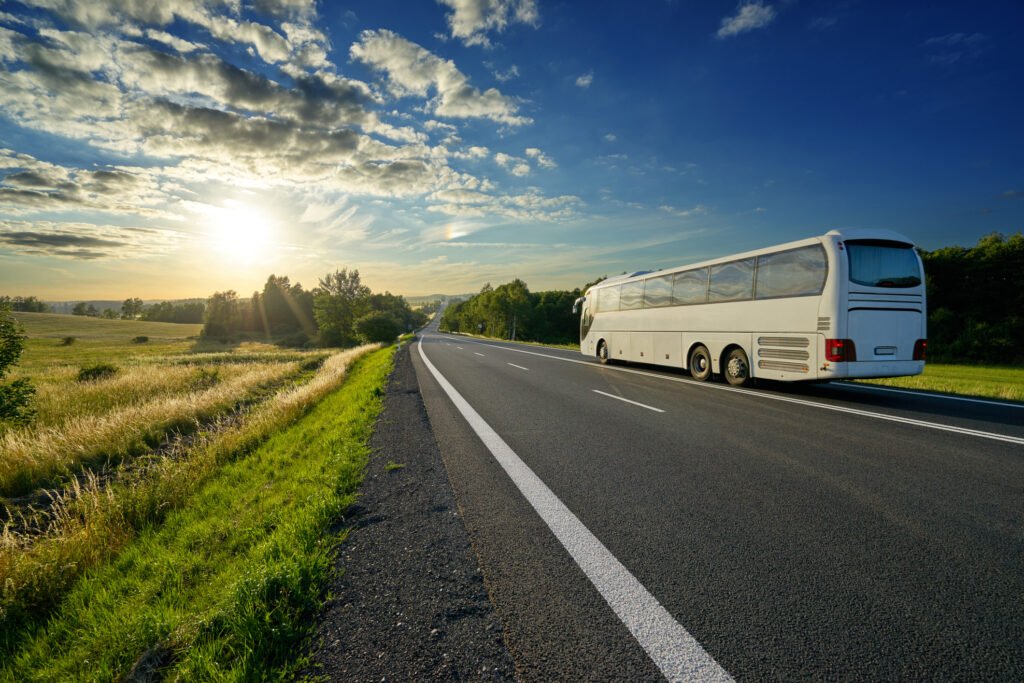
Coaches are designed for longer-distance road travel and can be an excellent budget alternative to trains.
They connect many major UK cities and can be particularly attractive when you are travelling on a tight budget and have more time available.
Why Choose a Coach?
The biggest advantage is often price. For some routes, coaches can cost considerably less than trains.
The trade-off is journey time. A coach can take substantially longer, so compare both the ticket price and the amount of time you will spend travelling.
Train vs Coach: Which Is Better?
| Factor | Train | Coach |
|---|---|---|
| Speed | ★★★★★ | ★★ |
| Price | ★★★ | ★★★★★ |
| Comfort | ★★★★ | ★★★ |
| City-centre access | ★★★★★ | ★★★★ |
| Best for | Time-conscious travellers | Budget travellers |
Choose the Train If…
- You value your time
- You are visiting several major cities
- Your itinerary is busy
- You prefer city-centre travel
Choose the Coach If…
- You are travelling on a tight budget
- You do not mind longer journeys
- Your schedule is flexible
- Price is more important than speed
Renting a Car in the UK
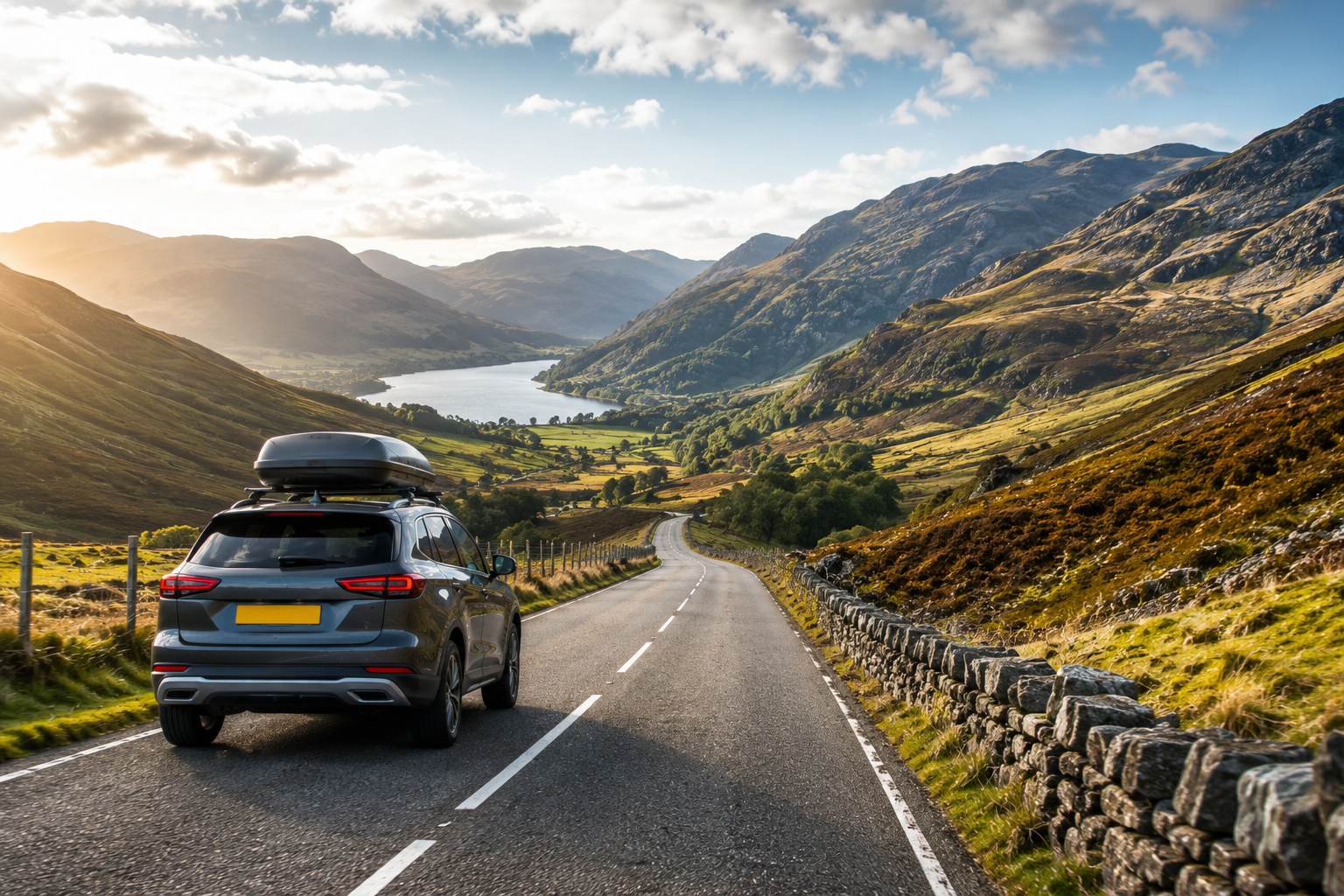
A rental car can completely change the way you experience the UK. However, a car is extremely useful in some parts of Britain and unnecessary in others.
Cars are particularly useful when exploring countryside destinations, remote attractions and scenic road-trip routes.
Where Is a Rental Car Most Useful?
When You Should Not Rent a Car
For most first-time visitors, renting a car in London is unnecessary and can make your trip more complicated.
London has an extensive public transport network, while driving can involve traffic, parking costs, congestion and unfamiliar road rules.
A Better Strategy
Consider exploring London without a car, travelling to your next destination by train and then renting a car only when you reach the countryside.
This hybrid approach can provide the flexibility of a car without paying for a vehicle you do not need in a major city.
If London is your first stop, continue with our 3 Days in London itinerary for a practical first-time visitor route.
Driving in the UK as an American or European Tourist
International visitors should understand a few important differences before renting a car.
- The UK drives on the left-hand side of the road.
- Distances and speed limits are generally displayed in miles.
- Roundabouts are common.
- Some rural roads can be narrow and winding.
- Manual-transmission cars are common in the UK and Europe.
Automatic vs Manual Rental Cars
If you normally drive an automatic vehicle, make sure your rental booking specifically states that the vehicle is automatic.
Automatic vehicles can sometimes cost more or have less availability, so checking early is sensible.
Travelling Around London
London is the easiest place in the UK to visit without a car.
For most tourists, the ideal combination is: walking + Underground + buses + trains.

Major attractions including Westminster, Buckingham Palace, the Tower of London, Covent Garden, Soho, South Bank and Camden can all be explored without renting a car.
Travelling Between London and Edinburgh
London and Edinburgh are two of the UK’s most popular destinations for international visitors, and you have several ways to travel between them.
Train
Usually the simplest option if you value speed and convenience.
Coach
Worth comparing if keeping transportation costs low is your priority.
Car
More appropriate if you are deliberately planning a road trip through northern England and Scotland rather than simply travelling directly from London to Edinburgh.
Travelling Around Scotland
Scotland requires a slightly different transport strategy.
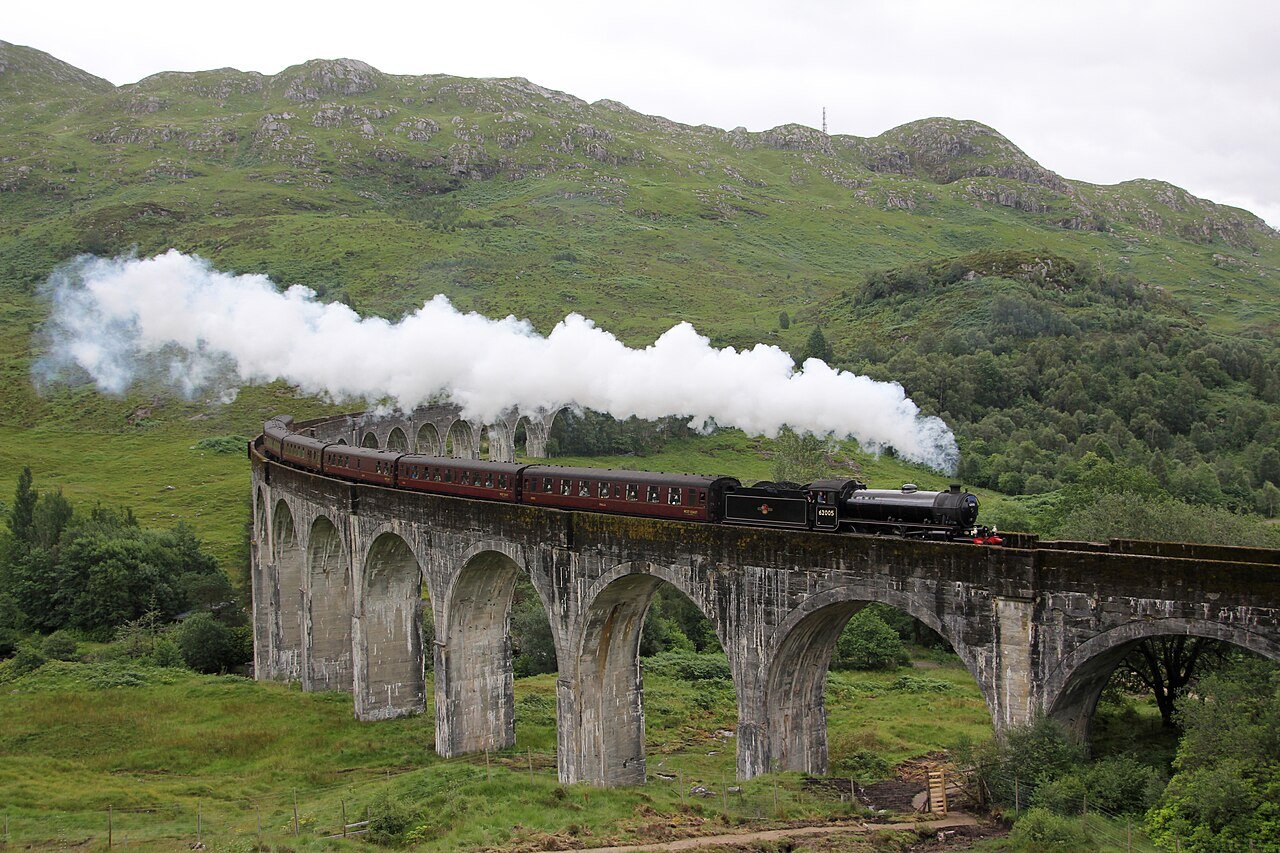
Edinburgh and Glasgow are relatively easy to explore using public transportation, but the Scottish Highlands and remote areas can be much easier to explore with a car.
| Area | Recommended Transport | Alternative |
|---|---|---|
| Edinburgh | Walking + bus + train | Taxi |
| Glasgow | Train + subway + bus | Taxi |
| Scottish Highlands | Rental car | Organised tour / train |
| Isle of Skye | Rental car | Organised tour |
Planning a Scotland trip? Read our 3 Days in Edinburgh itinerary and our guide to the best places to visit in Scotland .
Travelling Around England
England has an extensive rail network and many major tourist destinations are easy to reach by train.
Travelling Around Wales
Wales is another destination where combining different transport methods can work well.
Cardiff is easy to reach by train, while rural areas and destinations such as Eryri (Snowdonia), Pembrokeshire and parts of the Welsh coast can benefit from having a car.

Travelling Around the Cotswolds
The Cotswolds are one of Britain’s most popular countryside destinations, but the villages are spread across a large area.
A car can make it easier to visit several villages in one day, although it is possible to explore the area without driving by combining trains, buses, taxis and organised tours.
For more ideas, see our guide to the best places to visit in the Cotswolds .
Travelling Around the Lake District
The Lake District can be reached by train, but many scenic areas and attractions are spread throughout the national park.
A rental car can therefore provide greater flexibility, especially if you want to explore several lakes, villages and viewpoints during a short visit.
If you prefer not to drive, carefully planned public transport or an organised tour can still work well.
Travelling Around Northern England
Major cities in northern England are well connected by rail, making a train-based itinerary a practical choice.
Use trains for the major connections and walking or local public transportation once you arrive in each city.
Should You Travel the UK by Train or Car?
Choose a Train-Based Trip If…
- You are visiting major cities
- You do not enjoy driving
- You want to avoid parking
- You prefer city-centre travel
- You are travelling between London, York, Edinburgh or Manchester
Choose a Car-Based Trip If…
- You are visiting rural areas
- You want to take a countryside road trip
- You are visiting several small villages
- You are exploring the Scottish Highlands
- You want maximum flexibility
The Best Option: Combine Different Transport Methods
You do not need to choose between trains and cars for your entire holiday. In fact, combining transportation methods is often the smartest way to travel around the UK.
Example 10-Day UK Transportation Plan
| Days | Destination | Recommended Transport |
|---|---|---|
| 1–3 | London | Walking + public transport |
| 4 | London → York | Train |
| 5 | York | Walking |
| 6 | York → Edinburgh | Train |
| 7–8 | Edinburgh | Walking + public transport |
| 9–10 | Scottish Highlands | Rental car or organised tour |
How to Save Money on UK Transportation
Remember the Full Cost of a Rental Car
When comparing a rental car with trains, don’t look only at the advertised rental price.
- Rental cost
- Insurance
- Fuel
- Parking
- Additional drivers
- Potential one-way fees
- Automatic transmission surcharge
UK Transportation Tips for American Visitors
If you’re visiting from the United States, the UK’s transport system can feel different from what you’re used to at home.
- Cars drive on the left-hand side of the road.
- Road distances and speed limits use miles.
- Roundabouts are common.
- Trains can be much easier than driving between cities.
- Automatic rental cars should be booked specifically.
If your trip focuses mainly on cities, don’t rent a car simply because you’re accustomed to driving everywhere.
UK Transportation Tips for European Visitors
European visitors may already be familiar with extensive rail and public transport networks, but Britain’s rural transport system can still vary considerably by region.
Major cities are generally easy to reach by public transportation, while smaller villages and countryside attractions may require more planning.
What About Taxis and Ride-Hailing?
Taxis can be useful for short journeys, particularly when public transportation is inconvenient.
They can be particularly helpful when arriving late, travelling with heavy luggage, reaching rural accommodation or connecting a railway station with a hotel.
However, taxis are generally not the most economical choice for long distances, so they are best used strategically.
What About Domestic Flights?
Flying can be useful for some UK journeys, but it is not automatically the fastest or most convenient choice once the entire journey is considered.
Remember to include airport transfers, check-in, security, baggage collection and the journey from the airport to your final destination.
For many popular city-to-city journeys, a train can provide a simpler city-centre-to-city-centre experience.
Should You Buy a UK Travel Pass?
A travel pass may be useful for some itineraries, particularly if you plan multiple long-distance journeys and want flexibility.
However, don’t automatically assume a pass will be cheaper. Compare the expected cost of individual tickets with the pass before purchasing.
- How many journeys are you making?
- How long are the journeys?
- Are your dates fixed?
- Do you need flexible travel?
- Are you travelling during peak periods?
Best UK Transport Option by Destination
| Destination | Best Transport | Alternative |
|---|---|---|
| London | Underground + bus + walking | Taxi |
| Edinburgh | Walking + bus + train | Taxi |
| York | Train + walking | Bus |
| Bath | Train + walking | Bus |
| Manchester | Train + tram | Bus |
| Liverpool | Train + walking | Bus |
| Cotswolds | Car | Tour + bus |
| Lake District | Car | Train + bus |
| Scottish Highlands | Car | Tour / train |
| Cornwall | Car | Train + bus |
| Wales | Train + car | Bus |
| Oxford | Train | Bus |
| Cambridge | Train | Bus |
Which Way Should You Travel Around the UK?
The best transport option depends on your itinerary rather than one universal rule.
- Visiting major cities? Take the train.
- Travelling on a tight budget? Compare coaches with trains.
- Exploring rural Britain? Consider renting a car.
- Making short local journeys? Use buses and walk where practical.
- Combining cities and countryside? Use a mixture of transport methods.
Frequently Asked Questions
What is the best way to travel around the UK?
For most tourists, trains are the best option for travelling between major cities. Cars are more useful for rural destinations, while buses and coaches can provide cheaper alternatives.
Is it better to travel around the UK by train or car?
It depends on your itinerary. Trains are usually better for major cities, while cars are more convenient for rural areas such as the Cotswolds, Scottish Highlands and Lake District.
Is public transport good in the UK?
Public transport is generally very good in major UK cities and between many major destinations. Rural areas can have less frequent services, so additional planning may be necessary
Is driving in the UK difficult for Americans?
It can take some adjustment because vehicles drive on the left side of the road. Roundabouts and narrow rural roads can also be unfamiliar. However, many visitors become comfortable with UK driving quickly.
Do I need a car in London?
No. Most visitors should not need a rental car in London. Public transportation, walking and taxis are usually much more practical.
Is it cheaper to travel by train or coach in the UK?
Coaches are often cheaper, but trains are generally faster. Compare both options for your specific route and travel date.
Should I rent a car for my entire UK trip?
Usually not if your itinerary includes major cities. A better approach can be to use trains in cities and rent a car only for the countryside portion of your trip.
Can I travel around the UK without a car?
es. You can visit many popular UK destinations entirely without driving by combining trains, buses, coaches, walking and occasional taxis or organised tours.
Is a UK rail pass worth it?
It depends on how many journeys you’re making and how flexible you need to be. Compare the cost of individual tickets with the pass before buying.
How far in advance should I book UK trains?
For popular long-distance journeys, booking ahead can be useful, particularly if your travel dates and times are fixed. Compare fares before your trip rather than waiting until the last minute.
Can I use trains to visit the Scottish Highlands?
Yes, although rail doesn’t reach every attraction or remote location. For exploring widely dispersed Highland destinations, a rental car or organised tour may offer more flexibility.
What’s the best transportation for the Cotswolds?
A car is often the most flexible option because many villages are spread across a large area. However, it is possible to visit without a car using trains, buses, taxis and organised tours.