
UK Train Travel for Tourists: Complete Guide to UK Rail Travel
Planning to explore Britain by train? Learn how UK trains work, how to book tickets, understand fares, use railcards, navigate stations, save money and travel between Britain’s most popular destinations.

If you’re visiting the UK for the first time, train travel is one of the easiest ways to get around Britain.
You can travel from London to Edinburgh, York, Bath, Liverpool, Manchester and many other destinations without renting a car or navigating unfamiliar roads.
For international visitors, however, the UK railway system can initially seem confusing. There are different train operators, ticket types, fare rules, stations, railcards and booking options.
The good news is that once you understand the basics, travelling by train in the UK is relatively straightforward.
This complete UK train travel guide for tourists explains how UK trains work, how to buy tickets, when to book, how much train travel can cost, whether rail passes are worthwhile and how to avoid common mistakes.
Is Train Travel in the UK Good for Tourists?
Yes. For many visitors, trains are one of the best ways to travel around the UK.
Britain has an extensive railway network connecting major cities and many smaller towns. For tourists, one of the biggest advantages is that many stations are located close to city centres.
Easy City Connections
Major destinations such as London, York, Bath, Manchester and Edinburgh are connected by frequent rail services.
No Parking Stress
You can avoid finding and paying for parking in some of Britain’s busiest tourist cities.
Great for Multi-City Trips
Trains make it easy to combine several destinations in one UK holiday.
Popular UK Train Journey Times
| Route | Typical Journey Time* |
|---|---|
| London → Bath | Around 1.5 hours |
| London → York | Around 2 hours |
| London → Liverpool | Around 2–2.5 hours |
| London → Manchester | Around 2–2.5 hours |
| London → Edinburgh | Around 4.5–5.5 hours |
| London → Birmingham | Around 1.5 hours |
| Edinburgh → Glasgow | Around 1 hour |
*Journey times vary depending on the specific service, route and timetable.
How Does Train Travel Work in the UK?
The UK railway system isn’t operated by one single company. Different train operating companies run different routes.
For tourists, you don’t necessarily need to understand every operator. When planning a journey, concentrate on the practical details:
- Your departure station
- Your destination
- Your travel date
- Your preferred departure time
- Your ticket type
- Any restrictions attached to the ticket
When comparing services, look at the total journey rather than simply choosing the first train shown.
- Departure time
- Arrival time
- Journey duration
- Number of changes
- Ticket price
- Refund and change conditions
How to Book UK Train Tickets
International visitors have several options for purchasing UK train tickets.
1. Book Online Before Your Trip
This is usually the most convenient approach if your itinerary is already planned. It allows you to compare departure times and available fares before you arrive in Britain.
Planning your UK train journey?
Compare routes, departure times and available ticket options before finalising your itinerary.
2. Buy Tickets at the Station
You can also purchase tickets from ticket machines or ticket offices at many stations. This is convenient if your plans are flexible, although buying at the station isn’t automatically cheaper.
3. Use a Mobile Ticket
Many UK train journeys support digital tickets. Depending on the service, you may receive a QR code that can be displayed on your smartphone.
UK Train Ticket Types Explained
Understanding UK train tickets is one of the most important parts of planning your trip.
The three ticket categories tourists are most likely to encounter are Advance, Off-Peak and Anytime.
Advance Tickets
Advance tickets are generally tied to a specific train service.
If you book an Advance ticket for a particular departure, you normally need to travel on that booked service.
✓ Advantages
Potentially cheaper and useful for travellers with fixed itineraries.
✕ Disadvantages
Less flexibility and potentially problematic if you miss your booked train.
Best For
Tourists who know exactly when they want to travel.
Off-Peak Tickets
Off-Peak tickets provide more flexibility than Advance tickets but generally have restrictions on when you can travel.
They can be useful if you’re travelling outside the busiest periods and want some flexibility without paying for the most expensive flexible fare.
Anytime Tickets
Anytime tickets provide greater flexibility and are useful when you aren’t certain which train you’ll catch.
The trade-off is that they can be substantially more expensive.
Should Tourists Book UK Train Tickets in Advance?
Usually, yes.
If your itinerary is fixed, booking ahead can help you find cheaper fares. This is particularly relevant for popular long-distance routes such as:
- London → Edinburgh
- London → York
- London → Manchester
- London → Liverpool
For example, imagine you’re spending:
3 days in London → 2 days in York → 4 days in Edinburgh
You can research your major journeys before travelling rather than leaving every long-distance booking until the day of departure.
How Much Does Train Travel Cost in the UK?
There isn’t one standard price for UK train travel. Fares can vary significantly depending on:
- Route
- Travel date
- Time of day
- Ticket type
- How far in advance you book
- Train operator
- Flexibility
This is why it is better to compare fares for your actual travel date rather than relying on a generic “average UK train price.”
What Is a Railcard and Do Tourists Need One?
Railcards can provide discounts on eligible UK train journeys. There are different Railcards for different groups and eligibility requirements.
However, not every tourist will qualify for every Railcard.
Before buying one, calculate whether the expected savings are greater than the cost of the Railcard.
Check official Railcard information →
UK Train Stations: What Tourists Need to Know
One thing that surprises some international visitors is that large cities can have multiple railway stations.
London is the biggest example. There isn’t one central “London train station.”
King’s Cross
Important for destinations including York and Edinburgh.
Paddington
Major station for destinations including Bath and Cardiff.
Euston
Major departure point for Manchester, Liverpool and Birmingham services.
St Pancras
Major international station and an important London transport hub.
Waterloo
Important for routes serving southern England.
Victoria
Useful for several southern England destinations.
London Train Stations for Popular Tourist Routes
| Destination | Common London Departure Station |
|---|---|
| York | King’s Cross |
| Edinburgh | King’s Cross |
| Cambridge | King’s Cross / Liverpool Street |
| Bath | Paddington |
| Cardiff | Paddington |
| Manchester | Euston |
| Liverpool | Euston |
| Birmingham | Euston |
| Brighton | Victoria / London Bridge |
Routes and operators can change, so always confirm the departure station when booking.
How Early Should You Arrive at a UK Train Station?
For most domestic UK train journeys, you don’t need to arrive hours early.
For a normal intercity journey, arriving around 15–30 minutes before departure is a comfortable approach for many tourists.
This gives you time to:
- Find the station entrance
- Locate the departure board
- Find your platform
- Buy food or drinks
- Locate your carriage
At large stations such as King’s Cross or Euston, allow extra time if you are unfamiliar with the layout.
How to Find Your Platform
When you arrive, look for the departure screens.
You’ll typically need to check:
- Destination
- Departure time
- Train/operator
- Platform
- Calling points
Platforms may sometimes be announced relatively close to departure, so don’t worry if you don’t immediately see a platform number.
Do UK Trains Have Reserved Seats?
Some tickets and services allow or include seat reservations, while others may not.
If your ticket includes a reservation, check your:
- Coach or carriage number
- Seat number
- Quiet coach information, if applicable
For long journeys such as London to Edinburgh, reserving a seat can make the journey more comfortable, particularly during busy periods.
Can Tourists Use Contactless Payment on UK Trains?
Contactless payment is widely useful for certain journeys, particularly around London and on participating rail services.
However, don’t assume contactless works for every train journey across the UK.
London’s public transport system and Britain’s wider railway network have different payment arrangements.
For longer intercity journeys, check the payment and ticket requirements for your specific route before travelling.
For London transport information:
UK Train Travel vs Renting a Car
For many first-time visitors, the question is: Should I travel around the UK by train or rent a car?
| Train | Rental Car |
|---|---|
| Excellent between major cities | Better for remote areas |
| No parking concerns | More freedom |
| No need to drive on the left | Useful in the countryside |
| Good for city breaks | Useful for road trips |
| Can be expensive | Fuel, rental and parking costs apply |
| Limited in some remote regions | More flexible outside major cities |
For destinations such as London, York, Bath, Manchester and Edinburgh, trains are often very convenient.
For places such as the Scottish Highlands, rural Cornwall, parts of the Cotswolds and remote areas of Wales, a car can be more useful.
If Scotland is part of your itinerary, see our guide to the best places to visit in Scotland for ideas on where trains work well and where you’ll need other transport.
Best UK Train Routes for Tourists
Some railway journeys are more than simple transportation. They can be an important part of your UK travel experience.
A Classic UK Journey
One of Britain’s most useful long-distance journeys, connecting the capitals by rail.
Great for: First-time UK visitors.
History & Heritage
York is an excellent addition to a London itinerary, particularly for visitors interested in medieval history and historic architecture.
Roman History & Georgian Architecture
Bath makes an easy addition to a London trip and is famous for its Roman Baths and Georgian architecture.
Music & Culture
Liverpool is popular for music, football, museums and maritime history.
Football, Music & City Life
Manchester is a strong choice for visitors interested in football, music, museums, shopping and northern England.
Scenic Train Journeys in the UK
If you’re looking for more than simply getting from A to B, Britain has some spectacular railway journeys.
West Highland Line
A spectacular Scottish route associated with dramatic Highland scenery.
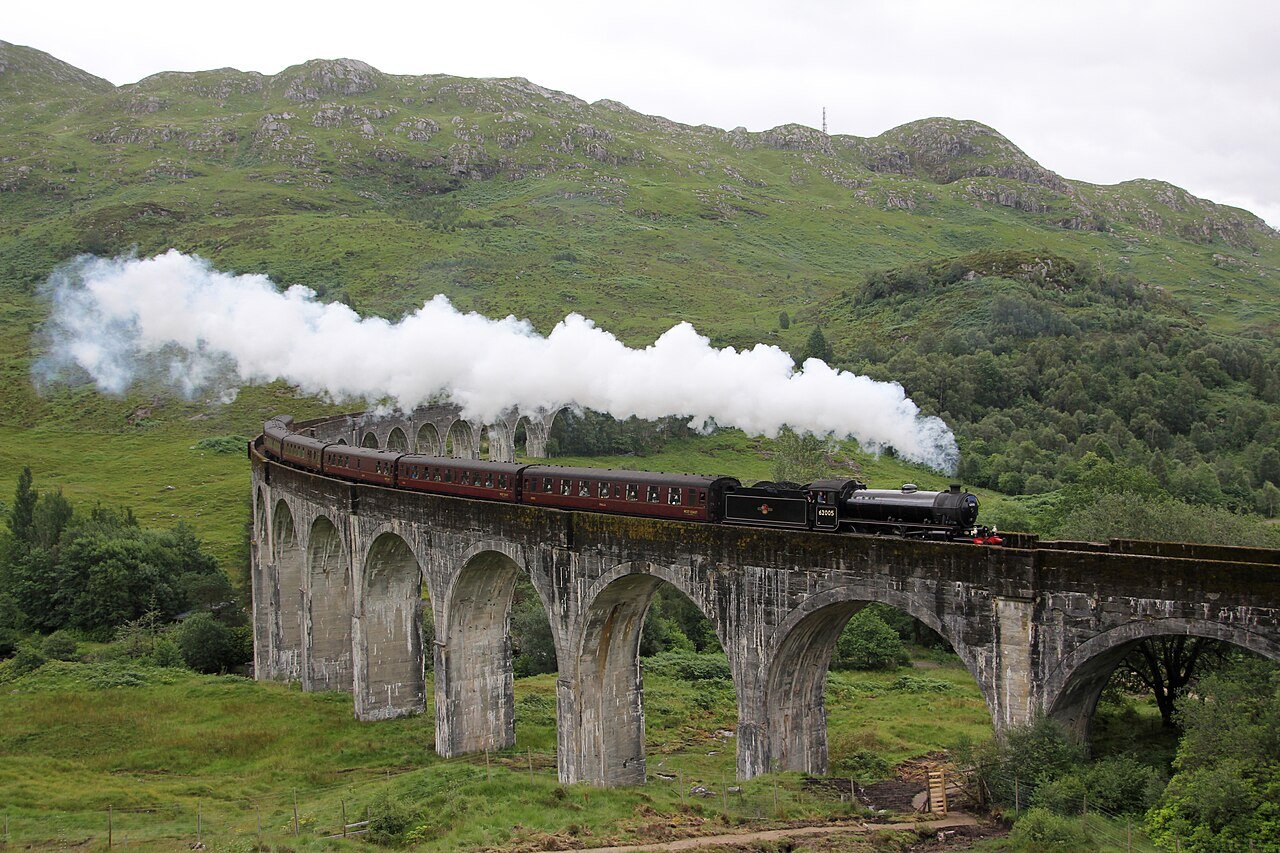
Jacobite Steam Train
A famous tourist railway experience through the Scottish Highlands.
Settle–Carlisle Railway
Known for dramatic landscapes across northern England.
Kyle Line
A scenic Scottish journey between Inverness and Kyle of Lochalsh.
Heart of Wales Line
A quieter railway experience through rural parts of Wales.
Planning a Scottish trip? See our guide to the best places to visit in Scotland →
UK Train Travel with Luggage
Travelling by train can be easier than flying when you’re carrying luggage because you generally don’t deal with airport-style baggage check-in.
However, luggage space can be limited.
A medium suitcase plus a smaller day bag is much easier to manage than several large suitcases, especially when changing trains or navigating busy stations.
Where Can You Put Luggage?
- Above your seat
- Under the seat
- In luggage racks
- In designated luggage areas
Food and Drinks on UK Trains
Some longer-distance trains have onboard catering, while others may have limited or no food service.
Don’t rely entirely on onboard catering, particularly if you’re travelling for several hours.
Before boarding a long journey, consider buying:
- Water
- Snacks
- Coffee
- Lunch for longer journeys
Large UK stations generally have plenty of food and drink options.
Wi-Fi and Charging on UK Trains
Many modern UK trains offer some combination of Wi-Fi, USB charging and power sockets, but availability varies between services.
International visitors should avoid relying entirely on onboard Wi-Fi.
Consider having:
- A UK-compatible SIM or eSIM
- Offline Google Maps
- Downloaded hotel information
- Offline copies of important travel information
What Happens If Your Train Is Delayed or Cancelled?
Train delays and cancellations can happen.
If your train is delayed or cancelled, check the information provided by the railway operator or station.
Depending on the circumstances and ticket conditions, you may be entitled to compensation or alternative travel arrangements.
What Happens If You Miss Your UK Train?
This depends on your ticket.
- Advance ticket: You may be restricted to the specific train you booked.
- Flexible ticket: You may have more options.
Common UK Train Travel Mistakes Tourists Make
- Booking the wrong London station. London has several major railway stations.
- Buying the most flexible ticket unnecessarily. If your plans are fixed, compare restricted fares.
- Waiting until the last minute. Popular routes can become expensive.
- Confusing trains with the London Underground. The Tube and National Rail are different systems.
- Bringing too much luggage. Busy stations and train changes are much easier with manageable luggage.
- Ignoring peak travel times. Commuter services can become extremely busy.
- Assuming every station has extensive staffing. Some smaller stations have limited staff.
How to Save Money on UK Train Travel
1. Compare Prices
Don’t automatically purchase the first fare you see. Compare departure times and ticket conditions.
2. Book Major Journeys Early
This is particularly useful for long-distance journeys when your itinerary is fixed.
3. Consider Off-Peak Travel
If your itinerary allows flexibility, compare Off-Peak fares with other ticket options.
4. Check Railcard Eligibility
A Railcard can be useful for eligible travellers who are taking enough journeys to recover the purchase price.
5. Compare Train vs Flight
A flight may appear cheaper at first, but remember to consider airport transfers, baggage, security and the time required to reach the airport.
Should Americans Rent a Car or Use Trains in the UK?
For many American tourists, trains are an excellent choice for a first UK trip.
If you’re visiting:
London → York → Edinburgh
you probably don’t need a rental car.
Driving in Britain can introduce additional challenges, including:
- Driving on the left
- Narrow roads
- Roundabouts
- Parking
- Congestion
- Insurance and fuel costs
But if you’re planning:
Edinburgh → Scottish Highlands → Isle of Skye
a car can become much more useful.
Should Europeans Travel Around the UK by Train?
For European visitors, train travel can be particularly convenient because many travellers are already familiar with rail travel.
If you’re arriving from mainland Europe, you may use Eurostar to reach London and then continue by UK train.
Planning your London arrival? See our 3 Days in London itinerary →
How to Plan a UK Trip Using Trains
Here’s an example of how train travel can connect a first-time UK itinerary.
London
Explore Westminster, the Tower of London, Buckingham Palace, the British Museum and Tower Bridge.
London → Bath
Explore the Roman Baths, Bath Abbey and Georgian architecture.
Bath → York
Travel north and begin exploring York’s historic centre.
York
Enjoy a full day exploring York’s historic streets and attractions.
York → Edinburgh
Continue north by train to Scotland’s capital.
Edinburgh
Explore Edinburgh Castle, the Royal Mile, Arthur’s Seat and Holyrood.
UK Train Travel Packing Checklist
🎫 Travel
Train ticket, passport and hotel booking information.
📱 Technology
Phone, charger, power bank and offline maps.
🥪 Journey
Water, snacks and headphones for longer journeys.
Best Apps and Websites for UK Train Travel
You don’t need dozens of apps to travel around Britain.
Train Journey Planner
Use a reliable journey planner to check routes, timetables and available services.
National Rail journey information →
Google Maps
Google Maps can be particularly useful for walking directions between your hotel, attractions and railway stations.
Train Operator Apps
If you’re travelling frequently with one operator, its official app may provide useful journey information and ticket management.
UK Train Travel Tips for First-Time Visitors
- Don’t panic about the railway system. It looks complicated but becomes straightforward quickly.
- Check the station carefully. This is particularly important in London.
- Book expensive long-distance journeys early. This can help you find better fares when your plans are fixed.
- Don’t over-plan every local journey. Leave some flexibility in your itinerary.
- Travel light. You’ll appreciate it when changing trains.
- Keep your phone charged. Digital tickets are common.
- Give yourself extra time at major stations. Especially when visiting for the first time.
- Check ticket restrictions. Know whether you’re booked onto a specific train.
- Consider trains plus a rental car. This can work better than relying exclusively on one form of transport.
- Compare total travel costs. Don’t look only at the ticket price.
Best Train Routes to Add to Popular UK Itineraries
| If you’re visiting | Consider adding |
|---|---|
| London | Bath, York, Oxford |
| London + Scotland | York + Edinburgh |
| London + Northern England | York + Manchester + Liverpool |
| Edinburgh | Glasgow + Highlands |
| Bath | Cotswolds |
| Manchester | Liverpool + York |
| Wales | Cardiff + Eryri/Snowdonia |
| Scotland | Edinburgh + Glasgow + Highlands |
Continue Planning Your UK Trip
Once you understand how UK trains work, use our destination and itinerary guides to build your trip:
- Best Things to Do in London
- 3 Days in London
- 3 Days in Edinburgh
- Best Places to Visit in Scotland
- Where to Stay in London
- 7-Day UK Itinerary
- 10-Day UK Itinerary
Final Verdict: Is UK Train Travel Worth It?
For most first-time visitors, absolutely.
If your UK trip focuses on major cities and popular tourist destinations, travelling by train can save you the hassle of driving, parking and navigating unfamiliar roads.
It’s particularly useful for itineraries such as:
London → Bath → York → Edinburgh
or
London → Manchester → Liverpool → York
The key is understanding that UK train fares can vary significantly.
Book major journeys in advance, compare ticket types, check your departure station carefully and don’t assume the cheapest-looking fare offers unlimited flexibility.
For rural Scotland, Cornwall, the Cotswolds, the Lake District and parts of Wales, consider combining trains with local buses, tours or a rental car.
Ready to plan your UK train journey?
Compare train routes and ticket options before you finalise your itinerary.
Frequently Asked Questions About UK Train Travel
Is train travel in the UK easy for tourists?
Yes. Train travel is generally straightforward once you understand the ticket system, stations and train schedules. Major tourist destinations are well connected by rail.
Is it cheaper to book UK trains in advance?
Often, yes. Advance fares can be cheaper than flexible tickets purchased closer to departure, although prices and availability vary.
Can Americans buy UK train tickets?
Yes. International visitors can generally purchase UK train tickets online and use digital tickets where available.
Do I need a Railcard as a tourist?
Not necessarily. Railcards are only worthwhile if you’re eligible and expect to save more on eligible journeys than the Railcard costs.
Can I use contactless payment on UK trains?
Contactless payment is available on many routes, particularly around London, but it isn’t universal across the entire UK railway network. Check your specific journey before relying on it.
Is it better to travel around the UK by train or car?
For major cities, trains are often more convenient. A car becomes more useful for rural areas and destinations with limited public transportation.
How early should I arrive at a UK train station?
For most domestic journeys, arriving around 15–30 minutes before departure gives first-time visitors enough time to find the correct platform. Allow more time at large unfamiliar stations.
Can I take large luggage on UK trains?
Yes, but luggage space varies. Travelling with manageable luggage is strongly recommended, especially when using busy stations or changing trains.
What happens if my UK train is cancelled?
Check the station or operator information and speak to railway staff. Depending on the circumstances, passengers may be offered alternative travel arrangements or may qualify for compensation.
Is the train from London to Edinburgh worth it?
For many tourists, yes. The train connects central London with central Edinburgh and avoids airport transfers and airport security procedures.
What is the best way to book UK train tickets?
Compare available routes, departure times and ticket conditions before booking. For international visitors, an established online booking platform can be convenient.